Your Own Stage, Your Own Rules: How Karaoke Pods Are Quietly Revolutionizing American Nightlife
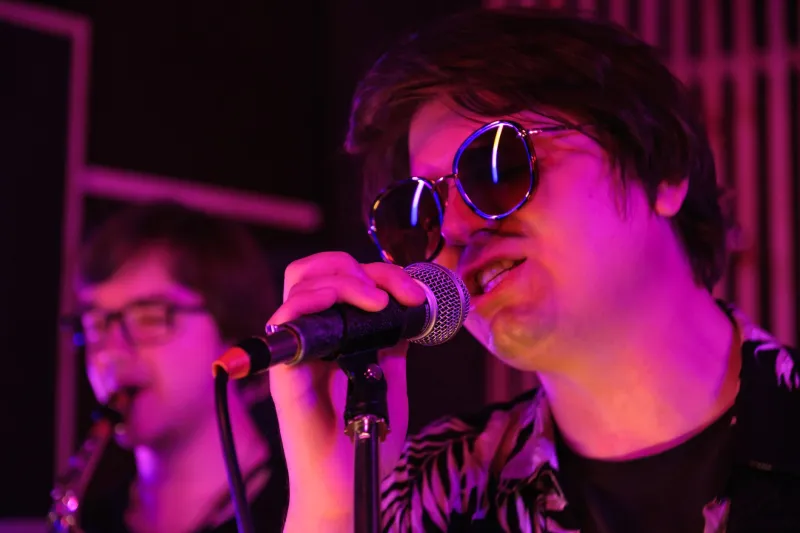
There's a specific kind of dread that comes with bar karaoke. You flip through the laminated songbook, pick your song, write your name on a slip of paper, and then wait — sometimes forty-five minutes — while strangers butcher Bohemian Rhapsody and a drunk guy at the bar heckles everyone. When your turn finally comes, you've either had too much to drink or not enough, and the whole thing feels less like fun and more like a dare.
Now imagine a different scenario: a cozy, soundproofed room just for you and your crew, a touchscreen catalog with tens of thousands of songs, a dedicated server who brings drinks on request, and zero judgment from anyone outside your own group. That's the karaoke box model — and it's been standard in Japan for over forty years.
America is finally catching on.
The Box That Changed Everything in Japan
The karaoke box concept emerged in Japan in the early 1980s, evolving from coin-operated karaoke machines in bars into a full-blown industry built around private, rentable singing rooms. By the 1990s, chains like Shidax and Big Echo were fixtures in every Japanese city, catering to everyone from salary workers blowing off steam after a long week to teenagers celebrating birthdays after school. The private room wasn't a premium upgrade — it was the standard. Public-stage karaoke, the kind most Americans grew up associating with the art form, was actually the outlier.
What made the format so sticky in Japan was its alignment with a specific cultural value: the idea that play should be immersive, personal, and free from unsolicited social pressure. You could go hard on a Whitney Houston power ballad without worrying about the crowd. You could laugh at your own mistakes. The room was yours, and that sense of ownership changed everything about the experience.
America's Appetite for Private Play
For a long time, karaoke box culture struggled to gain traction in the US. A few venues opened in cities with large Asian-American populations — Los Angeles, New York, Houston — and built loyal followings, but the concept never quite broke into the mainstream. Then something shifted.
Post-pandemic nightlife in America started looking for alternatives. Bars felt loud and impersonal. Clubs felt exhausting. People wanted to go out, but they wanted experiences that felt intentional — something to do rather than just a place to be. Private karaoke rooms fit that gap perfectly.
"We opened our second location in 2022 and the demand surprised even us," says Marcus Chen, co-owner of Singbox, a karaoke box venue with locations in Chicago and Austin. "We're seeing bachelorette parties, corporate team outings, first dates, friend reunions — it's become this universal occasion venue that works for almost any group dynamic. People tell us it's the most fun they've had going out in years."
The data backs him up. According to industry reports, private karaoke venue bookings in the US have grown by over 60% since 2021, with new operators entering markets in cities like Denver, Miami, and Seattle. Apps like Yelp and Google Maps have seen a spike in searches for "private karaoke room" that tracks closely with the broader experiential entertainment boom.
More Than Just Singing
What's interesting — and very much in line with Japanese play philosophy — is that the private karaoke room isn't really just about karaoke. Regulars describe it as a container for a much wider social experience.
"Half the time we're not even that focused on the singing," admits Priya Nair, a 29-year-old graphic designer in Los Angeles who books a private room with her friend group about once a month. "It's more like... a living room that we rented. We eat, we drink, we gossip, and occasionally someone belts out a Beyoncé song. The singing is almost an excuse to have a private space together."
That observation resonates deeply with how Japanese entertainment design tends to work. At Asobi Lab Billion, we talk a lot about how Japanese play culture treats the environment of fun as seriously as the activity itself. The room isn't a backdrop — it's part of the experience. Karaoke boxes are designed to feel like a world unto themselves, with mood lighting, themed décor, and acoustics tuned to make even an average singer sound halfway decent.
American operators are learning this lesson fast. Venues are investing in production value: LED lighting rigs, tambourines and maracas stocked in every room, premium sound systems, and food menus that go well beyond the sad mozzarella sticks of traditional bar karaoke. Some spots in New York are offering bottle service packages and DJ-mixed song transitions. The experience is being engineered.
The Introvert Advantage
There's another layer here worth examining. America is in the middle of a broader cultural reckoning with social anxiety and introversion — a conversation that exploded during the pandemic and hasn't really quieted down since. Private karaoke rooms offer something genuinely rare: a social experience that doesn't punish people who aren't naturally comfortable being the center of attention.
"I would never do bar karaoke," says Derek Fontaine, a 34-year-old software developer from Seattle. "The idea of performing for strangers is my nightmare. But in a private room with four of my friends? I've done songs I can't believe I did. It's a completely different psychological experience."
Japanese entertainment designers understood this intuitively decades before "introvert" became a mainstream identity category. The box format democratizes the performance — everyone sings, everyone is equally vulnerable, and the shared absurdity creates its own kind of bonding.
What's Next for the Pod Economy
The karaoke box model is already spawning spinoffs. Escape rooms borrowed the private-group-in-a-dedicated-space formula. Rage rooms (where you pay to smash things) use similar logic. Even some axe-throwing venues are starting to offer private lane rentals for groups who don't want to share the space with strangers.
But karaoke boxes hold a unique position because they combine multiple pleasures — music, performance, food and drink, privacy, and social connection — into a single, time-boxed experience. You book for two hours, you're fully present, and then you leave. There's a clarity to that structure that resonates with how younger Americans increasingly want to spend their leisure time.
For venues, the model also makes strong business sense. Private rooms generate predictable revenue through advance bookings, reduce the unpredictability of walk-in crowd management, and create upsell opportunities through food and drink packages.
Japan figured this out in 1983. America is figuring it out now. And if the lines at new venues in Austin and Chicago are any indication, the karaoke box is only getting started.