There's No English Word for What Japan Means by 'Play' — So American Studios Are Borrowing One
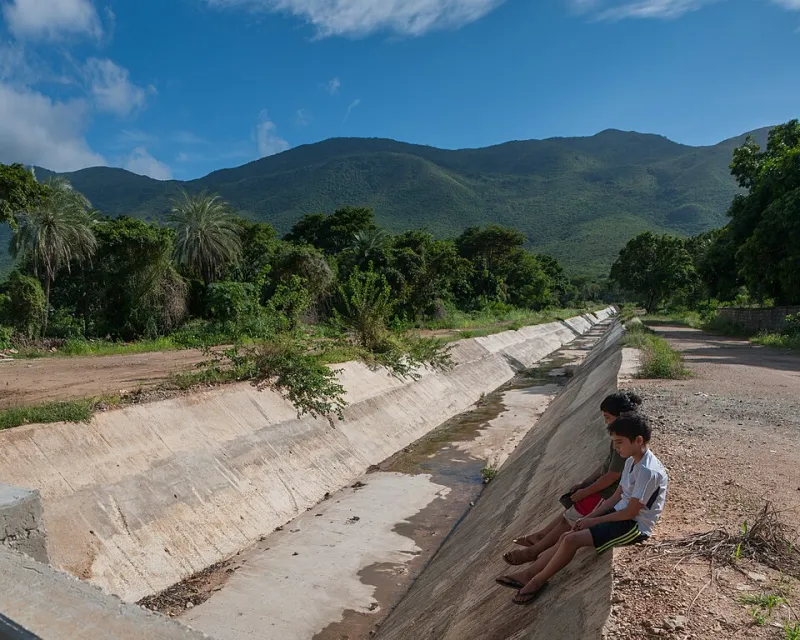
Photo: Wilfredor, CC0, via Wikimedia Commons
Ask an American designer what they make and they'll say games. Ask a Japanese designer and they might say asobi — and the difference between those two words is quietly reshaping how play gets built on this side of the Pacific.
A Word That Refuses to Translate
Asobi (遊び) technically means play, but the translation flattens it. In Japanese, asobi covers a spectrum we don't have a single English word for: the unstructured messing-around a kid does with sticks, the experimental improvisation of a jazz musician, the way friends kill an afternoon with no goal attached. The classical scholar Yanagi Sōetsu and the philosopher Kuki Shūzō both wrote about it as a mode of freedom — activity done for its own sake, not for output.
English doesn't have that word. We have "gaming," which implies systems, objectives, and winning. We have "leisure," which sounds like a brochure. We have "hobby," which comes with a faint apology attached. What we don't have is a word that says: this matters precisely because it means nothing.
That's a vocabulary problem, and vocabulary problems become design problems. When your only word for play is "game," you build games — scored, ranked, optimized, monetized. When your word is asobi, you build room to wander.
Why the Word Is Showing Up in American Studios
Spend enough time in design circles in the US and you'll start hearing it — usually dropped into conversation with a slight self-consciousness, the way people once said "hygge." Indie developers describe their prototypes as "more asobi than game." Design professors use it to describe the ungraded, unscored portions of student projects. A few product teams have started distinguishing between "engagement design" and "asobi design" — the first engineered to keep you, the second engineered to set you free.
The distinction matters more than it sounds. Engagement design asks: how do we make sure the player comes back tomorrow? Asobi design asks: does this feel good to poke at right now, even if the player never comes back? One optimizes for retention metrics; the other optimizes for the quality of a single unhurried moment.
American play culture has been engagement-first for so long that most of us don't notice the difference. Battle passes, daily quests, streak counters — these are all answers to the question "how do we keep them?" Almost nothing in mainstream design answers "how do we release them?"
The Play Deficit Is a Language Problem
Here's the uncomfortable part: Americans are famously bad at unstructured play. Adults especially. We've turned recreation into performance — Peloton leaderboards, Strava segments, fantasy leagues with spreadsheets. Even our fun gets KPIs.
Part of that is cultural, sure. But part of it is that we literally lack the concept. Research on child development keeps confirming what Japanese educators have long treated as obvious: unstructured, purposeless play is how humans build creativity, tolerance for ambiguity, and social trust. Japan institutionalized this — kindergarten curricula built around jiyū asobi, or free play, where teachers intervene as little as possible. American kindergartens, meanwhile, keep sliding toward worksheets.
When designers start using the word asobi, something shifts. It gives them permission — and a shared vocabulary — to defend play that produces no measurable outcome. You can't put "minutes of purposeless joy" on a dashboard, but you can name it, and naming it is the first step to protecting it.
What Asobi Design Actually Looks Like
A few tells that a piece of work was designed for asobi rather than engagement:
- No punishment for wandering. The systems reward curiosity, not completion. Poke at a wall and the wall does something delightful, not something transactional.
- Silence where a tutorial would be. Trust the player to figure it out. Discovery is the reward.
- An ending that doesn't beg. No "one more turn" hooks, no fear-of-missing-out events. The work is content to be picked up and put down.
- Tools, not content. The designer builds a sandbox and then has the discipline to stay out of it.
None of this is new to Japanese design — it's the DNA behind everything from Nintendo's toy-first philosophy to the quiet indie scene that treats a game like a garden rather than a service. What's new is Americans adopting the framing on purpose.
Why We Put the Word in Our Name
Full disclosure: it's the reason "Asobi" is sitting right there in our masthead. We borrowed the word because there was no adequate substitute, and because the gap in our language felt like the gap in our culture. A lab dedicated to play — real play, the purposeless, experimental, freeing kind — needed a word that didn't come pre-loaded with leaderboards.
Words shape what we can imagine. As long as American designers only had "game," they kept building games: closed, scored, competitive, finite. Now there's a borrowed word making the rounds in studios and classrooms, and with it a different question: not "how do we make this addictive?" but "how do we make this free?"
That's not just semantics. That's the beginning of a design movement — and it started with a word we had to import.