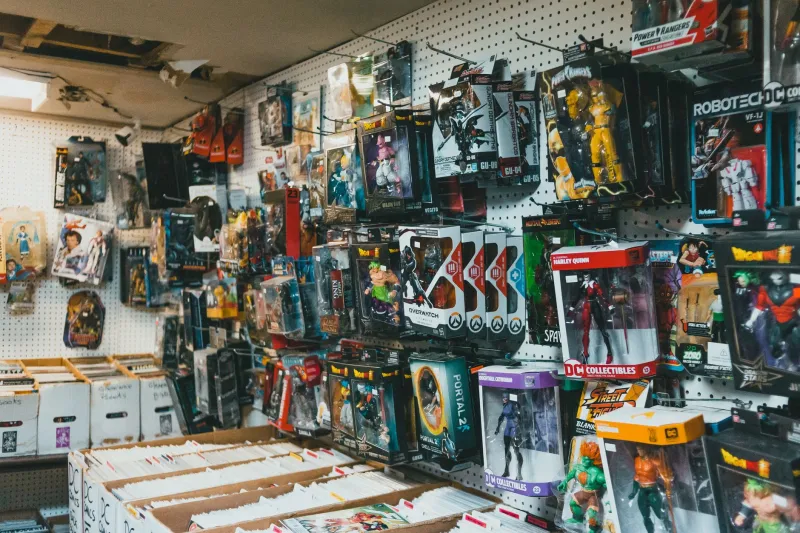
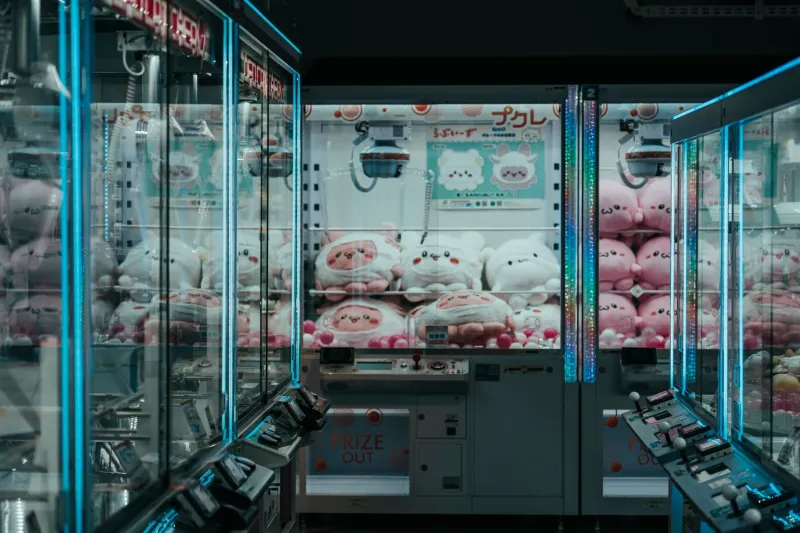
The Capsule and the Algorithm: How Japan's Gashapon Obsession Became America's Most Controversial Spending Habit
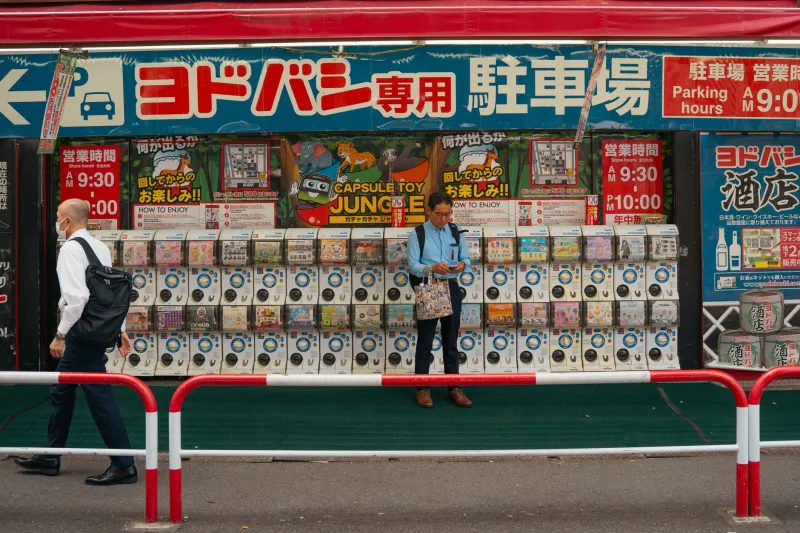
Picture a vending machine the size of a minifridge, crammed into the corner of a Japanese convenience store or toy shop, filled with little plastic eggs. You turn a chunky dial, hear a satisfying clunk, and out rolls a capsule. Inside: a tiny figurine, a keychain, a miniature food item rendered in absurd detail. You might get the one you wanted. You probably won't. You will almost certainly try again.
This is gashapon — a portmanteau of the Japanese words for the dial-turning sound and the capsule drop — and it has been a fixture of Japanese consumer culture since the 1960s. It's cheerful, tactile, and slightly addictive in a way that feels mostly harmless when you're standing in front of a machine in Harajuku, fishing through your pockets for 500-yen coins.
Now scale that mechanic into a mobile game with a $200 million monthly revenue figure and a user base of tens of millions, and the conversation gets a lot more complicated.
From Plastic Eggs to Digital Pulls
The jump from physical gashapon to digital gacha systems wasn't instantaneous — it was more like a slow migration that tracked the rise of smartphone gaming in Japan through the late 2000s and early 2010s. Games like Puzzle & Dragons and Kantai Collection essentially translated the capsule machine into a digital format: spend in-game currency (earned through play or purchased with real money), pull a virtual "banner," receive a randomized character, item, or card.
The psychological bones were identical. The randomness. The rarity tiers. The way the animation on a "rare pull" was designed to make your heart rate spike. The only difference was that digital gacha could be iterated on, A/B tested, and optimized with a precision that no physical vending machine could match. Game designers could tweak drop rates in real time. They could introduce "limited" banners that expired in 72 hours. They could build in "pity systems" — guarantees that kicked in after a certain number of failed pulls — that kept players engaged just long enough to prevent them from quitting.
By the time Fate/Grand Order launched in 2015 and started generating the kind of revenue numbers that made Western publishers sit up straight, the template was set. Gacha wasn't just a monetization model. It was a behavioral architecture.
Why Your Brain Loves It (Even When You Don't)
Behavioral economists have a field day with gacha systems, and for good reason — they're essentially slot machines wearing a cartoon costume.
The core mechanism is what psychologists call a "variable ratio reinforcement schedule." Unlike a fixed reward (you do X, you get Y), variable ratio rewards are unpredictable. You might get the rare character on your third pull. You might get it on your three hundredth. That unpredictability is, counterintuitively, what makes the behavior so sticky. It's the same psychological engine that keeps people at slot machines in Vegas, and it's extraordinarily difficult to walk away from once you're engaged.
Dopamine, the neurotransmitter associated with anticipation and reward, fires not just when you get the thing you want, but when you might be about to get it. The pull animation in a gacha game — that slow-building visual reveal — is engineered to maximize that anticipatory window. It's not accidental. It's design.
What makes gacha particularly potent compared to traditional gambling is the layered justification structure it provides. You're not gambling, you're playing a game. The characters you pull have utility — they make your team stronger, they unlock story content, they let you participate in events. The expenditure feels productive in a way that dropping quarters into a slot machine doesn't. That cognitive wrapper makes it significantly easier to rationalize spending that, viewed in aggregate, would give most people pause.
The Cultural Divide
Here's where it gets genuinely interesting from a cross-cultural perspective: Japanese consumers and American consumers relate to gacha systems in measurably different ways, and those differences reveal a lot about how each culture thinks about money, entertainment, and value.
In Japan, gashapon culture is deeply normalized from childhood. The physical capsule machines are everywhere — in grocery stores, train stations, tourist spots. Spending a few hundred yen on a random toy is a regular, low-stakes activity that carries no particular social stigma. That cultural baseline makes the transition to digital gacha feel more like a natural extension of an existing habit than an introduction to something new.
In the US, the equivalent childhood touchstone is closer to trading cards — Pokémon, Magic: The Gathering, sports cards — which also involve randomized packs and rarity chasing. But American consumer culture has also been shaped by a stronger tradition of price transparency and value-for-dollar thinking. When American players encounter gacha systems, they often experience a sharper dissonance between what they're spending and what they're getting, which is part of why the moral debate around these systems is louder in the West.
That debate has real stakes. Several European countries have classified certain gacha mechanics as gambling and moved to regulate them. In the US, the FTC has held hearings on loot boxes (a close cousin of gacha) and the conversation around disclosure requirements for drop rates has been ongoing for years. Apple and Google have both implemented policies requiring mobile games to publish their gacha odds — a change that came directly from regulatory pressure and consumer advocacy.
The Designers' Dilemma
Game designers who work with gacha systems occupy a genuinely uncomfortable space. Many of them are, by their own admission, building systems they know are psychologically manipulative — and they're doing it because the economics of free-to-play mobile gaming essentially require it.
The math is brutal: the vast majority of mobile game players spend nothing. The business model depends on a small percentage of high spenders — colloquially called "whales" — subsidizing the experience for everyone else. Gacha systems are optimized to identify and extract value from that segment, which means they're necessarily designed to be most compelling to the people who are most susceptible to compulsive spending.
Some studios are trying to thread this needle more carefully. Games like Genshin Impact — which has become the most prominent gacha title in the Western market — publish their drop rates, implement pity systems that guarantee rare pulls within a defined window, and offer meaningful free-to-play progression that doesn't require spending to enjoy the core experience. It's not a perfect solution, but it represents a genuine attempt to make the model more ethical without abandoning it entirely.
The Capsule Rolls On
American spending on gacha-adjacent systems — mobile gacha games, loot boxes in console titles, digital card packs — now runs into the billions annually. That number keeps growing. The model has proven so effective at generating revenue that it's migrated well beyond mobile gaming into mainstream titles from major studios.
What's remarkable, when you trace it all the way back, is that this entire economy grew from the DNA of a small plastic capsule in a Tokyo corner store. The dial. The clunk. The moment of not-yet-knowing.
Japan exported a lot of things to American pop culture. It turns out one of the most consequential exports was a vending machine mechanic — and the complicated, dopamine-drenched relationship with randomness that came with it.