Cute, Pointless, and Completely Necessary: The Japanese Design Philosophy That's Winning Over American Collectors
The Object That Does Nothing, Perfectly
On a shelf above Dani Reyes's desk in Denver sits a small, round, slightly melancholy-looking capsule toy frog. It cost her roughly $4 from a Gashapon machine at an import store. It does not light up. It does not make sound. It cannot be upgraded, unlocked, or connected to an app. It is, by any conventional measure of consumer value, completely useless.
Dani will tell you it's one of her favorite objects in the world.
"There's something about it," she says, turning it over in her palm. "It just looks like it's thinking about something sad. I don't know. Every time I see it I feel something."
This is not an unusual story. Across the United States, a growing community of collectors — spanning ages, incomes, and aesthetic sensibilities — has developed a genuine obsession with Japanese toys, figures, and character goods that serve no functional purpose whatsoever. And the more you dig into why, the more you realize that "useless" might be exactly the wrong word.
Mono No Aware and the Design of Feeling
Japanese aesthetic philosophy has a concept that doesn't translate cleanly into English: mono no aware (物の哀れ). Roughly, it means the bittersweet awareness of impermanence — the feeling you get watching cherry blossoms fall, or holding something small and fragile and beautiful and knowing it won't last. It's melancholy, but it's also tender. It's grief and appreciation happening simultaneously.
Japanese product designers — particularly in the toy and character goods space — have been quietly encoding this sensibility into objects for decades. The slight downward tilt of a character's eyes. The imperfect roundness of a hand-painted ceramic figure. The deliberate simplicity of a design that could have been more detailed but chose not to be. These aren't accidents. They're invitations to feel something.
Kazuko Nishida, a Tokyo-based product designer whose work spans both corporate toy lines and independent capsule releases, describes the goal this way: "We're not designing a toy. We're designing a moment. The object is just the container for the moment to live in."
Western toy design, by contrast, has historically prioritized function, play value, and increasingly, digital integration. The toy should do something. It should have features. It should justify its price point through capability. Japanese character goods often do the opposite — they justify their existence through pure emotional resonance, asking nothing of you except that you look at them and feel something.
The Blind Box Effect: Randomness as Design Feature
Nothing illustrates this philosophy more clearly than the global explosion of blind box toys. Brands like Sonny Angel, Labubu (from Pop Mart), and the classic Gashapon capsule system have built massive American followings around a simple, slightly absurd premise: you pay for a toy, and you don't know which one you're getting.
From a pure consumer logic standpoint, this is irrational. You're surrendering control over your purchase. You might get a duplicate. You might get the one character in the series you actively don't want. By Western retail logic, this should be a dealbreaker.
Instead, it's the whole appeal.
"The not-knowing is the fun," explains Tyler Chung, a 28-year-old IT professional in Atlanta who estimates he's spent around $600 on Sonny Angel figures over the past two years. "It's like a tiny lottery that doesn't feel gross because even the 'loss' is cute. You still get something. And the moment of opening it — that two seconds — is genuinely exciting every single time."
The randomness introduces an element of fate into the transaction. Your frog chose you. That Labubu with the surprised expression was meant to end up on your nightstand. It's a small, silly, completely manufactured sense of destiny — and it works, psychologically, in ways that feel almost disproportionate to the price point.
Desk Creatures and the Aesthetics of Doing Nothing
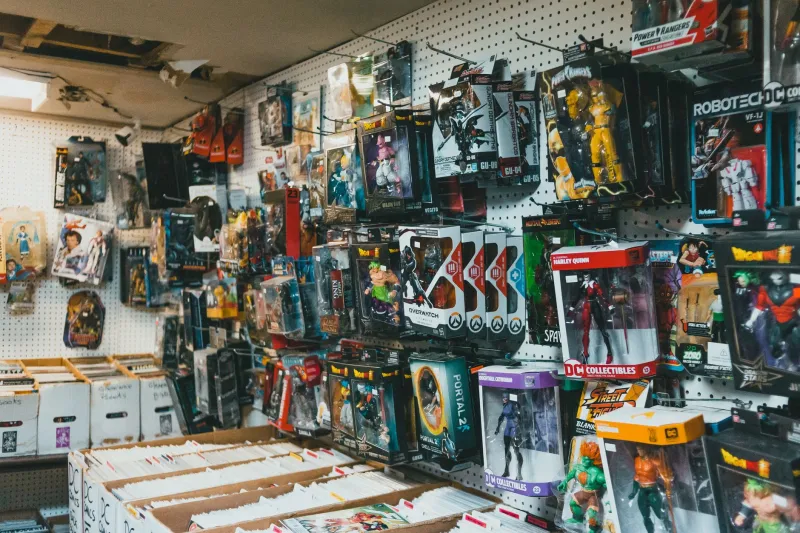
Beyond blind boxes, there's an entire ecosystem of Japanese-designed objects built specifically for desk environments — small figures, textured fidget objects, and character accessories that exist purely to be looked at, touched, or arranged. The Netsuke tradition (miniature Japanese carvings originally used as kimono toggles) is arguably the ancient ancestor of this genre, objects designed to be held and appreciated without any additional utility.
Modern iterations include everything from the endlessly satisfying Kirby Café merchandise to independent artists selling hand-sculpted resin figures through platforms like Booth.pm. What connects them is a design attention to surface texture, weight, and visual quietness that Western mass-market toys rarely bother with.
"Japanese toy designers think about how something feels in your hand before they think about what it does," says Priya Anand, who runs a small import shop in Chicago specializing in Japanese character goods. "American customers pick these things up and you can see it on their faces — there's this recognition, like, oh, this is what quality feels like when it's not trying to impress you."
The fidget object market, turbocharged by pandemic-era anxiety, created an American appetite for exactly this kind of tactile satisfaction. But where many Western fidget products feel clinical or gadgety, their Japanese equivalents tend to feel alive — small animals, expressive characters, objects with implied emotional states.
What 'Useless' Is Actually Doing
Psychologists who study object attachment have a term for the relationship people form with items that hold emotional rather than functional value: transitional objects. The concept, originally applied to childhood comfort items, extends naturally into adult life. We form genuine emotional bonds with objects that help us regulate mood, signal identity, and create small moments of joy in daily environments.
Japanese toy design seems to understand this at an almost intuitive level. The slight sadness in a character's expression gives you permission to project your own feelings onto it. The randomness of the blind box creates a story — the story of how you got this particular one, on this particular day. The physical smallness of the object makes it intimate rather than performative.
None of this requires the object to do anything in the conventional sense. The doing is happening inside you.
"I have a Sonny Angel on my desk at work," says marketing manager Rachel Osei in New York. "On bad days I look at it and it just... helps. I can't explain it better than that. It helps."
The Infiltration Is Already Happening
American consumer culture is catching on, slowly and somewhat awkwardly. Pop Mart now operates retail locations in New York and Los Angeles. Target carries Sonny Angel. Mainstream media has started covering blind box culture as a trend rather than a curiosity. The design language is leaking into American-made products, though often without the underlying philosophy that makes the originals feel different.
The real thing — the objects that carry that specific quality of designed feeling, of mono no aware encoded in plastic or resin or ceramic — still mostly comes from Japan, or from designers trained in that tradition. And the collectors who've found it tend to describe the discovery in terms that sound less like shopping and more like stumbling onto something they didn't know they needed.
A small frog on a shelf in Denver, thinking its small, sad thoughts.
Completely useless. Completely necessary.