Why Gen Z Is Ditching Leaderboards for Laser Tag: The Quiet Rise of Japan's Play-for-Play's-Sake Philosophy
Quarters in the Machine, Zero Expectations
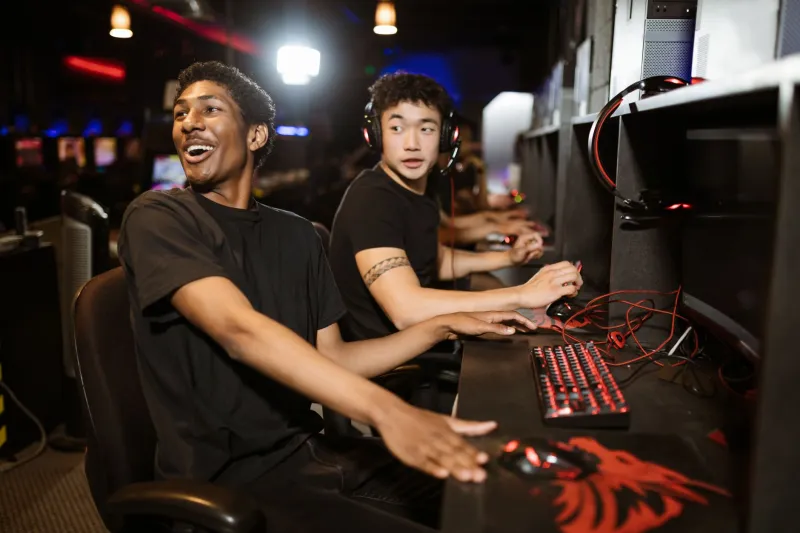
Walk into Round1 on a Saturday night in any major American city and you'll notice something strange. The teenagers clustered around the Taiko no Tatsujin drum machines aren't checking high scores. They're barely even looking at the screen. They're laughing at each other, arguing about rhythm, occasionally just slapping the drum heads for the pure tactile joy of it. Nobody's grinding. Nobody's optimizing. Nobody seems to care whether they win or lose.
This is not the arcade culture your dad remembers.
Somewhere between the death of the original American arcade scene in the late '90s and the current moment, Japan quietly kept the flame alive — and now that flame is spreading back west, carrying with it a fundamentally different idea about what games are actually for.
The Optimization Trap and How Japan Escaped It
American gaming culture, for better or worse, got swallowed whole by optimization. Speedrunning, min-maxing, ranked ladders, battle passes, engagement loops engineered to squeeze every minute of productive playtime from your evening. Even casual mobile games come loaded with daily mission trackers and efficiency ratings. Play became work wearing a costume.
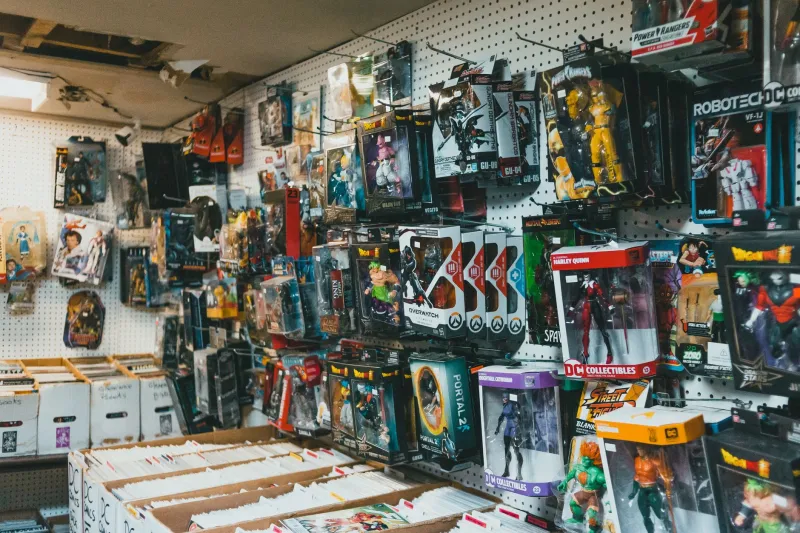
Japan's arcade scene never fully made that turn. Walk into a game center in Akihabara or Osaka and you'll find crane games stacked floor to ceiling, rhythm games that reward feeling over precision, and medal games that operate on a kind of communal, low-stakes gambling energy that's more about the vibe than the payout. The goal, culturally, has always been closer to aimless enjoyment than competitive conquest.
There's actually a Japanese concept that maps onto this pretty cleanly: ma (間), the idea of productive emptiness, of space that exists not to be filled but to be inhabited. Traditional Japanese aesthetics celebrate the pause, the gap, the moment between notes. Applied to play, it suggests that the space between winning and losing — the messy, unquantifiable middle of just doing the thing — might be the whole point.
"American kids are coming into our arcade burned out," says Marcus Webb, who co-owns a Japanese arcade import bar in Austin, Texas. "They've spent all week being measured — at school, on social media, in their games. When they find something that just lets them be bad at it and laugh about it, they go feral. In the best way."
Vintage Machines, Very Current Feelings
The retro angle adds another layer. Alongside modern imports, a parallel wave of classic Japanese arcade cabinet restoration is happening across the US. Venues in Brooklyn, Portland, and Chicago are stocking original Konami and Capcom hardware from the late '80s and '90s — not as nostalgia bait for millennials, but as genuine discovery experiences for people who weren't alive when these games were new.
Gen Z's relationship with retro isn't sentimental; it's anthropological. They're not chasing lost childhood memories. They're finding something they never had: games with a beginning, a middle, and an end. No season passes. No social pressure. No content calendar. A game that simply exists in space and time and stops when you walk away.
Jordan Kessler, a 22-year-old graphic design student in Philadelphia, describes their first encounter with a restored Bubble Bobble cabinet as almost meditative. "It didn't want anything from me. It wasn't tracking my playtime or suggesting I buy a skin. It was just... a game. It felt so weird and then it felt incredible."
This is the philosophical shift cultural critics have started mapping in real time. The move from winning to being. From games as achievement systems to games as experiences that simply occur and then end.
What Japanese Minimalism Actually Looks Like at Play
It's worth being specific about what makes Japanese arcade design philosophically distinct from the Western model. Many Japanese arcade games — particularly rhythm and crane game genres — are built around what designers call te no kioku, or muscle memory. The reward isn't a number going up. It's your body learning something. Your hands getting faster. Your timing sharpening. The progress is physical and internal, not displayed on a leaderboard.
Satoshi Murai, an independent game designer based in Tokyo who consults for American arcade operators, explains it this way: "In Japan, we often design for the feeling of the moment, not the record of the moment. If you feel good playing, the game worked. Whether you won is almost secondary."
That design philosophy translates into spaces that feel fundamentally different from Western gaming venues. Less competitive signage. More ambient sound. More group-facing machines where everyone can watch and cheer. The social architecture is built for collective experience rather than individual performance.
Digital Burnout and the Hunger for Something Real
Here's the uncomfortable truth sitting underneath all of this: Gen Z is exhausted. They've grown up entirely inside systems designed to measure, rank, and monetize their attention. The psychological toll of that — the constant self-optimization anxiety, the social media performance pressure, the sense that even leisure time has to be productive — is showing up in therapy offices and in the choices young people make with their free time.
Retro Japanese arcade culture offers a specific kind of relief. It's analog enough to feel physical. It's social enough to feel human. It's low-stakes enough to feel safe. And crucially, it ends. You run out of quarters. The session concludes. You go home.
There's no notification pulling you back at 2 a.m. No algorithm calculating your optimal re-engagement window. The game does not miss you when you leave.
For a generation that has never known what it feels like to be untracked, that's not a limitation. It's a revelation.
What Comes Next
The American arcade revival isn't going to look exactly like Japan's game center culture — it never could. But the philosophical import might matter more than the hardware. The idea that play doesn't need a purpose. That losing can be fun. That the best games are the ones that let you be bad at them in public with your friends and feel nothing but the specific joy of that specific moment.
Japan has been sitting on this knowledge for decades. Gen Z, burned out and algorithm-weary, is finally ready to receive it.
Maybe the most radical thing a game can do right now is simply ask nothing of you.