Tiny Worlds, Real Escape: How Japan's Miniature Diorama Craze Is Turning American Commutes Into Something Worth Carrying

There's a woman on the L train in Chicago who carries a small acrylic case in her tote bag. Inside it: a 1:12-scale ramen shop, complete with a noren curtain made from cut fabric, a plastic bowl of noodles with hand-painted broth, and a tiny chalkboard menu with prices written in marker. She built it herself over three weekends. She brings it to work every day. She says it's the only thing she looks at on her commute that doesn't make her feel worse.
She's not alone, and she's definitely not weird. She's part of something that's been quietly building momentum for years — a miniature diorama movement rooted deep in Japanese craft culture that's now finding an unexpected home in the bags, apartments, and daily rituals of American collectors who are tired of owning things that don't mean anything.
Japan's Long Love Affair With the Very, Very Small
In Japan, miniature culture isn't a niche — it's practically a design tradition. From the hyper-detailed plastic food models displayed outside restaurants to the intricate dollhouse scenes sold in craft stores like Seria and Daiso, there's a national fluency around smallness that goes beyond cute. It's about precision. About the idea that something tiny, made carefully, holds more emotional weight than something large made carelessly.
Diorama kits — pre-cut components you assemble into tiny scenes, often Japanese streetscapes, retro cafés, or seasonal landscapes — have been a staple of Japanese hobby culture for decades. Brands like Rokuhan, Hasegawa, and a wave of indie creators on platforms like Booth.pm have elevated the format into genuine art. The scenes aren't meant to be played with. They're meant to be looked at. Thought about. Returned to.
What makes these kits distinct from, say, a model train set or a LEGO build is their emphasis on atmosphere. You're not constructing a mechanism. You're constructing a feeling — the particular stillness of a rainy evening outside a konbini, the warm glow of a paper lantern festival, the quiet chaos of a cluttered bookshop. The goal is to make something that makes you pause.
The Commute as Gallery
Here's where it gets interesting for Americans. Japan's miniature culture was largely designed to live on shelves — in dedicated display cases, in glass-fronted cabinets, in the kind of thoughtfully organized home spaces that Japanese interior culture celebrates. But American collectors have done something unexpected with the format: they've made it mobile.
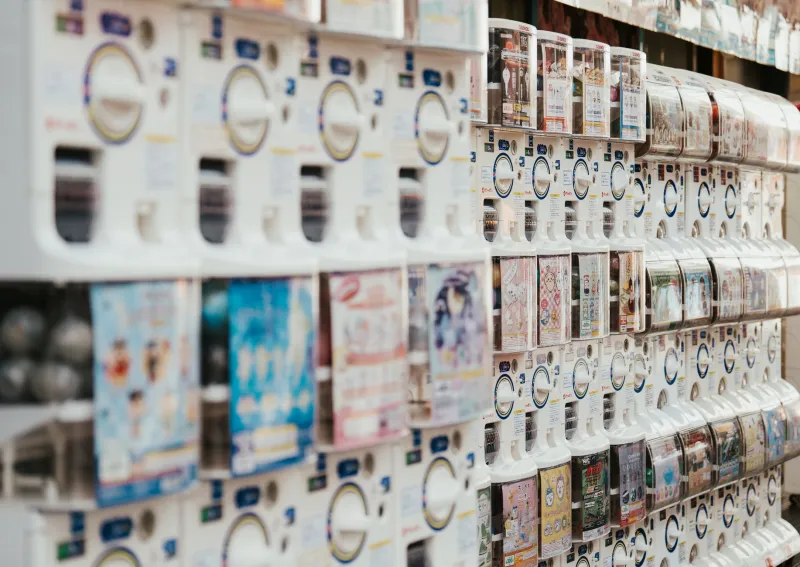
Portable acrylic display boxes, originally popular in Japan for protecting gashapon figures and resin collectibles, have become the vessel of choice for diorama lovers on the go. You'll find them showing up in TikTok videos tagged #dioramatok and #miniaturelife, perched on office desks, photographed on subway seats, tucked into the side pockets of commuter backpacks. The diorama-as-companion is a distinctly American remix of a Japanese art form.
And there's something almost poetic about it. The average American commute — whether it's forty minutes on the Metro or an hour of stop-and-go on I-95 — is one of the most psychologically taxing parts of the day. We reach for our phones out of reflex, doom-scrolling through content designed to agitate us into engagement. The miniature diorama offers a genuinely different option: a small, handmade world that asks nothing of you except attention.
Building as Meditation, Owning as Intention
The process of constructing a diorama kit is slow by design. You're cutting, painting, gluing, waiting for things to dry. You're making decisions about color and placement that nobody else will ever fully notice. It requires the kind of focused, low-stakes attention that meditation teachers have been trying to sell Americans on for years — except it comes with a finished object at the end.
This is one reason the hobby has resonated so strongly with people who describe themselves as burned out, overstimulated, or just bored of buying things that don't stick. A diorama kit from a Japanese craft brand might run anywhere from $15 to $80. It takes hours to complete. And when it's done, it's genuinely yours — not a product you unboxed and photographed, but something you made with your hands that reflects choices you made deliberately.
There's an anti-haul energy to it that feels timely. In a moment when minimalism has become its own kind of performance and decluttering is a content genre, the miniature diorama sidesteps the whole conversation. It's small by definition. It takes up almost no space. But it carries enormous personal meaning — which, if you think about it, is exactly what most of our stuff fails to do.
The Social Layer (That Isn't Exhausting)
It would be easy to assume that miniature diorama culture has been swallowed whole by social media — turned into an aesthetic, a brand opportunity, a way to perform a certain kind of artsy intentionality. And yes, there are Instagram accounts with hundreds of thousands of followers dedicated to tiny scenes. There are YouTube channels where creators spend two hours building a 1:24-scale jazz bar.
But the community around this hobby has a noticeably different texture than most collector spaces online. People share in-progress photos, ask genuinely humble questions about technique, and celebrate other people's finished work without the competitive edge that shows up in sneaker collecting or trading card culture. Maybe it's because dioramas can't be ranked. There's no resale market to speak of. Nobody's flipping a miniature ramen shop for profit.
The Japanese concept of monozukuri — the art and spirit of making things — hovers over the whole scene. It's not just about the object. It's about the act of making it, the attention you paid, the care embedded in each tiny detail. American collectors have absorbed this idea more deeply than you might expect.
What You're Really Carrying
Back to the woman on the L train. When she pulls out her miniature ramen shop and sets it on her knee for a few minutes before her stop, she's not performing anything. She's not posting it. She's just looking at something she made, something that took time and intention, something that fits in her bag and still manages to feel like a whole world.
That's the real promise of Japan's miniature diorama culture — not that it turns your commute into a gallery opening, but that it gives you something genuinely worth carrying. In a daily life full of content that evaporates the second you look away, a tiny handmade scene of a lantern-lit alley has a kind of staying power that's almost embarrassing by comparison.
The museum fits in your pocket. And somehow, that makes it feel more real than most of the museums you've ever visited.