Collect It, Keep It, Mean It: How Japan's Sticker Culture Is Teaching Gen Z to Own Less and Care More
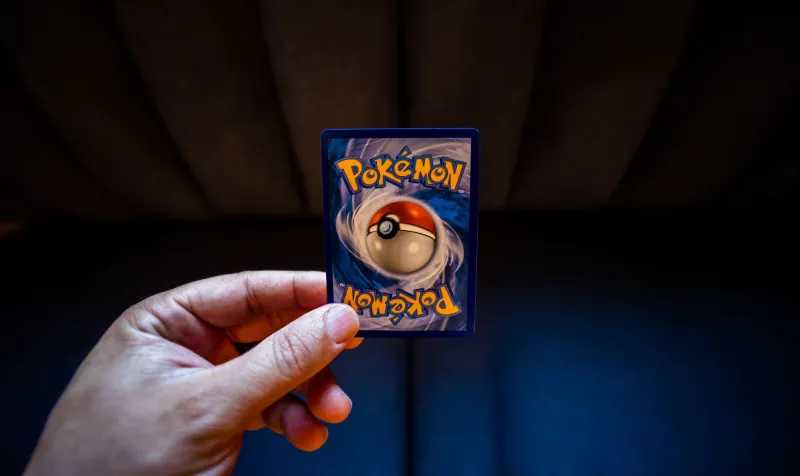
There's a small plastic binder sitting on a shelf in a Portland apartment. Inside it, slipped carefully into clear sleeves, are about 200 stickers — holographic Sanrio characters, foil-stamped Pokémon, a few vintage Sailor Moon purikura strips, and a handful of limited-edition drops from Japanese indie artists found on X (formerly Twitter). The owner, a 23-year-old named Dani, hasn't stuck a single one of them anywhere.
"They're not decorations," she says. "They're mine."
That distinction — between displaying something and owning it — sits at the heart of a slow-burning cultural shift happening right now in the US. Japanese collectible culture, long dismissed in America as niche or nostalgic, is suddenly functioning as something much more radical: a counterweight to the throwaway economy.
The Endless Scroll vs. The Binder on the Shelf
Let's be honest about what fast fashion actually sold us. It wasn't just cheap clothes — it was the feeling of newness, on demand, forever. SHEIN hauls. Micro-trend cycles that burn out in three weeks. The dopamine hit of the unboxing video, followed by the quiet guilt of a closet you can barely close.
Gen Z grew up inside that system, and a lot of them are exhausted by it. But the response hasn't been a clean pivot to minimalism or sustainable brands with $180 tote bags. Instead, something stranger and more interesting is happening: young Americans are turning toward collecting as a form of intentional consumption.
And Japan, it turns out, has been doing this for decades.
Japanese sticker culture goes back at least to the 1970s and '80s, when kids were trading Famicom character stickers on school grounds the same way American kids were trading baseball cards. Purikura — those tiny, elaborately decorated photo booth prints — became a social currency among teenage girls in the '90s. Menko cards, bromides, trading card game pulls: Japan built an entire ecosystem around the idea that small, physical, limited things could carry enormous emotional weight.
Mono No Aware and the Art of Letting a Thing Matter
There's a Japanese concept worth knowing here: mono no aware. It loosely translates to "the pathos of things" — a bittersweet awareness of impermanence, the idea that something becomes more beautiful because it won't last forever. Cherry blossoms hit different because they're gone in two weeks. A limited-run sticker sheet means something because they stopped printing it.
Here's the paradox that's playing out in American youth culture right now: a philosophy built around impermanence is actually teaching people to slow down and value what they have.
When everything is available forever — when every song is on Spotify, every movie is on a streaming service, every fashion trend gets a fast-fashion knockoff within two weeks — nothing feels precious. But when a Japanese indie artist drops 50 foil sticker sheets and they sell out in four minutes, the people who got one feel something. They're not just consumers anymore. They're custodians.
Dani puts it plainly: "I've spent probably $400 on stickers over two years. I've spent way more than that on clothes I don't wear anymore. The stickers are still here. I still care about every single one."
Trading, Not Trashing
One of the most interesting behavioral shifts happening in this space is the resurgence of trading — a practice that fast fashion essentially killed because you can't trade a $12 H&M top the way you can trade a holographic Eevee card.
At events like Anime Expo in LA or Crunchyroll Expo in San Jose, trading tables have become some of the most crowded spots on the floor. People show up with binders — yes, actual binders — and spend hours negotiating swaps. There's no money changing hands. There's no algorithm suggesting what you might like next. It's just two people looking at physical objects and deciding what matters to them.
This mirrors something deeply embedded in Japanese collector culture, where the act of trading (and the social ritual around it) is often as valued as the object itself. In Japan, even the packaging of collectibles is treated with care — boxes are kept, inserts are preserved, condition matters. American hypebeast culture flirted with this idea through sneaker collecting, but stickers and trading cards are democratizing it. You don't need $300 to participate.
The Sustainability Angle Nobody's Talking About Loudly Enough
Here's what's genuinely surprising when you zoom out: this collecting behavior is quietly functioning as a sustainability practice, even when nobody's framing it that way.
A sticker or trading card takes up almost no physical space. It requires minimal resources to produce compared to a garment. It holds or increases in value over time rather than degrading in a landfill. And critically, it travels — it gets traded, gifted, resold, passed along. The lifecycle of a well-loved collectible looks nothing like the lifecycle of a fast fashion item.
Environmental researchers at the University of Michigan published findings a few years ago showing that the fashion industry accounts for about 10% of global carbon emissions annually. The collectibles market, by comparison, is built on scarcity — which means less production, more circulation of existing items, and a built-in incentive to preserve rather than discard.
Nobody's calling sticker collecting an environmental movement. But the behavior patterns it encourages — curation over accumulation, preservation over disposal, meaning over novelty — map surprisingly well onto what sustainability advocates have been asking consumers to do for years.
What Platforms and Brands Are Getting Wrong
The market has noticed, of course. You can't have a trend this visible without brands trying to colonize it. Limited-edition drops from American companies now mimic the aesthetics of Japanese collectible culture constantly — mystery boxes, foil variants, numbered editions. Some of it works. A lot of it doesn't.
The difference, collectors will tell you, comes down to intentionality. Japanese collectible culture has craft behind it. The foil stamping on a Pokémon card or the die-cut precision on a quality sticker sheet reflects genuine care in production. When an American fast fashion brand slaps a "limited edition" label on a mass-produced item, Gen Z can smell the cynicism from a mile away.
Authenticity isn't a marketing strategy here. It's the entire point.
Playing the Long Game
What's emerging isn't a rejection of consumption — it's a reformation of it. Young Americans aren't swearing off buying things. They're getting more deliberate about which things, and why.
Japanese collectible culture, with its long history of treating small objects as worthy of genuine attention and care, handed them a framework that fast fashion never could. You can't binder-sleeve a trend. You can't trade a micro-season. But you can hold a perfectly preserved foil sticker up to the light, ten years from now, and remember exactly where you got it and why it mattered.
That's not nostalgia. That's ownership — the real kind.
And in a world where everything is designed to be forgotten by next Tuesday, it turns out that might be the most rebellious thing a young consumer can do.