Screens Off, Imagination On: How Japanese Toy Makers Are Winning Over Burned-Out American Kids
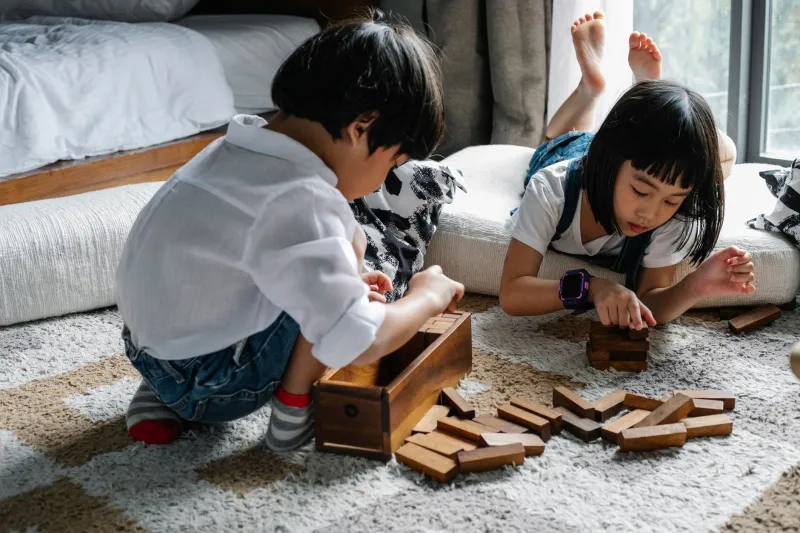
Somewhere between the fourth hour of YouTube Kids and the third tantrum over a dead iPad battery, a lot of American parents hit a wall. And increasingly, the thing waiting on the other side of that wall is a small, colorful, gloriously screen-free toy made in Japan.
It sounds almost too simple. But a genuine cultural shift is underway — one where Japanese toy designers, from giants like Nintendo to tiny indie studios operating out of Osaka apartments, are leaning hard into analog play at the exact moment Silicon Valley keeps doubling down on more screens, more interactivity, more everything. The contrast couldn't be more striking. Or more intentional.
The Philosophy Behind the Plastic
Japanese toy design has always had a complicated relationship with technology. Yes, Japan gave the world Game Boys and Tamagotchis and rhythm game cabinets that could practically read your soul. But running parallel to that digital current has always been a deep respect for mono no aware — the beauty found in simple, impermanent things. A spinning top. A folded piece of paper. A wooden puzzle that takes forty-five minutes and zero Wi-Fi to solve.
That sensibility never really disappeared. It just got drowned out for a while.
Now it's coming back loud. Japanese designers are producing toys that are explicitly built around what they call ma — a concept roughly translating to meaningful empty space, or purposeful pause. In toy terms, that means products that don't tell kids what to do next. They don't buzz, reward, or redirect. They just sit there and wait for a child's imagination to fill the gap.
For American kids raised on apps that deliver dopamine hits every eight seconds, that silence is almost disorienting at first. And then, for a lot of them, it becomes addictive in a completely different way.
The Pokewalker Effect
Remember the Pokewalker? That little egg-shaped pedometer bundled with Pokémon HeartGold and SoulSilver back in 2010? You clipped it to your belt, walked around, and your Pokémon leveled up in your pocket while you lived your actual life. No screen required. The game happened in the physical world.
It sold millions. Kids wore those things until the clips broke. And the reason wasn't complicated — it made the real world feel like part of the game, without demanding that you stare at anything.
Designers paying attention to that moment are now building entire product lines around its core insight. Several Japanese toy studios — many of them too small to have English-language websites yet — are producing tactile, pocket-sized objects that reward physical interaction over screen time. Think textured fidget tools with internal mechanical feedback, small magnetic construction sets based on traditional Japanese joinery principles, and hand-crank toys that generate light or sound purely through motion.
None of these things need batteries. None of them have apps. And the waitlists on some of them, imported through specialty retailers on the coasts, stretch for months.
Why American Parents Are Actually Paying Attention
Let's be honest — American parents have heard the "less screen time" lecture approximately ten thousand times. What's different now isn't the message. It's that the alternatives are finally interesting enough to compete.
For years, the "analog toy" category in the US meant either nostalgic throwbacks (Lincoln Logs, anyone?) or expensive Montessori-adjacent wooden objects that looked better on Instagram than they played in real life. Neither category was particularly exciting to a kid who'd just discovered Roblox.
Japanese design changes that equation because it takes play seriously as a craft. The aesthetic is sharp. The tactile quality is excellent. And crucially, these toys are often weird in ways that feel fresh rather than retro. A braided rope puzzle that's been iterated on by the same family workshop for three generations doesn't feel like a step backward — it feels like something you've genuinely never encountered before.
American parents, particularly those in urban centers and tech-adjacent communities who've watched the anxiety data on childhood screen exposure pile up, are responding. Specialty toy shops in cities like Portland, Austin, and Brooklyn report that Japanese-imported analog toys consistently outperform expectations in the under-ten category. One Brooklyn shop owner described it as "the only segment where I'm actually struggling to keep shelves stocked."
The Silicon Valley Pushback Nobody Expected
Here's where it gets genuinely interesting: some of the loudest champions of this analog toy movement are people who work in tech.
There's a certain irony in the fact that engineers and product designers at major Bay Area companies are the ones importing Japanese wooden puzzles for their kids and swapping notes in Slack channels about which tactile toys survive the longest before getting thrown across the room. But it tracks. These are people who understand, maybe better than anyone, exactly how attention-capture mechanics work — and exactly what they're doing to developing brains.
The Japanese approach offers something Silicon Valley isn't structurally capable of providing: an experience that genuinely ends. You finish the puzzle. You solve the toy. You put it down. There's no infinite scroll, no next video, no notification pulling you back. The play has a shape, and that shape has edges.
For kids who've spent their entire conscious lives inside products designed to never let them go, that finitude is almost radical.
What Comes Next
The analog toy trend isn't going to replace digital play — and nobody serious is arguing it should. Japan, of all places, understands that screens and physical objects can coexist beautifully. The country that invented the Famicom also invented origami kits that ship with QR codes linking to folding tutorials. Balance is kind of the whole point.
But what Japanese toy designers are demonstrating right now is that there's a real, underserved appetite for play experiences that ask something of kids rather than just delivering to them. Experiences that are a little slow, a little quiet, and a little bit frustrating in ways that turn out to be good for you.
Purposeful boredom, it turns out, isn't a bug. It's the feature American kids might need most right now.
And Japan has been building it all along.