Hidden in Plain Sight: How Japanese Indie Devs Are Smuggling Radical Ideas Into Your Game Library
The Game That Made You Feel Guilty for Pressing Start
You're three hours into what looks like a cheerful little puzzle game. Pastel colors. Soft music. Simple rules. Then the game quietly restructures its own interface without telling you, and suddenly you realize you've been following instructions you never actually agreed to. Nobody told you to feel unsettled. The mechanic did it for you.
This is the quiet revolution happening inside Japanese indie game development right now. A growing cluster of independent creators — many working out of Tokyo, Osaka, and smaller cities far from the AAA spotlight — are using the structure of gameplay itself to ask uncomfortable questions. Not through cutscenes. Not through dialogue boxes. Through the actual act of playing.
And American audiences, increasingly worn down by corporate entertainment that confirms rather than challenges, are absorbing it faster than anyone expected.
Why Japan Became the Unlikely Home of Game-as-Protest
It might seem counterintuitive. Japan isn't exactly famous for loud political dissent. But that's kind of the point. Japanese indie developers have spent decades learning to work around direct confrontation, embedding critique inside systems, aesthetics, and mechanics that appear innocent on the surface.
There's a long cultural tradition here — from rakugo storytelling to certain strands of manga — of hiding the sharpest commentary inside the most accessible packaging. The indie game scene inherited that instinct and ran with it into digital territory.
Think about a game like Yume Nikki, the surrealist RPG from 2004 that's still being analyzed by players today. On paper, it's a game about exploring dream worlds. In practice, it's a meditation on isolation, internal architecture, and the way institutions — school, family, routine — can quietly hollow a person out. Nothing in the game tells you that. You feel it through the emptiness of the maps, the silence, the lack of objectives. The absence of instruction is the commentary.
That lineage is alive and mutating in contemporary Japanese indie work.
Mechanics as Message
The most interesting thing about this generation of Japanese indie titles isn't their narratives — it's how they use rules to make arguments.
Take games that deliberately punish compliance. In several recent titles from Japanese indie circles, following the game's explicit instructions leads to worse outcomes than ignoring them. You're rewarded for questioning the tutorial, for poking at the edges of what you're told is possible, for refusing to accept the first answer the game offers. The message isn't written anywhere. It's baked into cause and effect.
Other titles play with hierarchy in ways that feel almost satirical. Games where the authority figure — a boss character, a system prompt, a god-voice narrator — turns out to be wrong, self-serving, or outright malicious. The twist isn't a story beat. The player has been enacting obedience for hours before the reveal lands, which makes the discomfort personal in a way a movie never could.
This is what game designers sometimes call "ludonarrative" coherence — when what you do and what the game means are the same thing. Japanese indie developers have gotten extraordinarily good at this, often more so than their Western counterparts, who tend to separate gameplay from message into different compartments.
Why American Players Are Responding
Here's the context that matters for US audiences right now: there's a real hunger for entertainment that doesn't feel pre-approved.
The dominant American gaming landscape — especially the AAA space — has become increasingly risk-averse. Sequels, franchises, optimized engagement loops. Nothing wrong with any of that individually, but collectively it creates a kind of aesthetic monoculture. Players start to feel the invisible hand of focus-group testing in every design decision.
Japanese indie games, distributed through Steam and itch.io and increasingly through curated lists shared on gaming forums and social media, arrive without that baggage. They feel handmade in a way that's become rare. And when one of them quietly dismantles your assumptions about authority or obedience through a mechanic you thought was just a puzzle — that hits differently.
There's also a generational angle. Younger American players, particularly those who grew up watching institutions fail in fairly visible ways, are primed to appreciate games that treat skepticism as a virtue rather than a glitch. When a Japanese indie title rewards you for questioning its own rules, that resonates with an audience that's been questioning a lot of rules lately.
The Aesthetics of Innocence
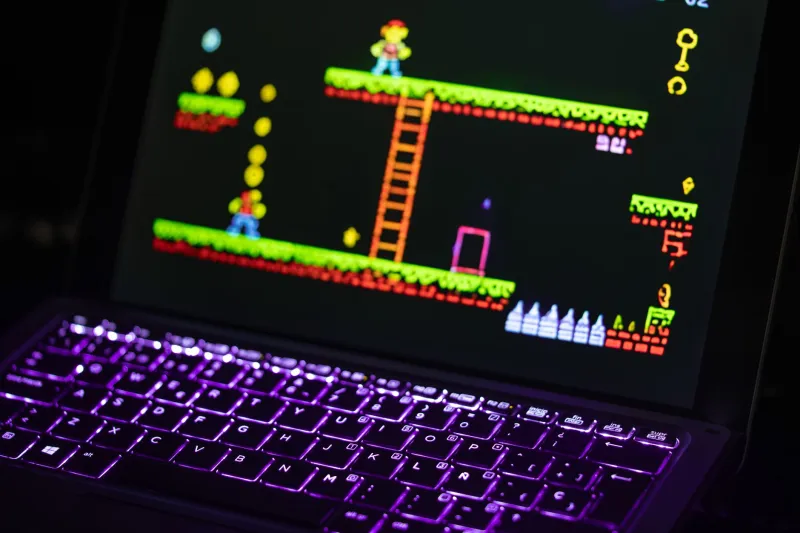
One of the cleverest tools in this toolkit is the deliberate use of cute, low-fi, or retro aesthetics to lower a player's defenses. A game that looks like it was made for children — soft sprites, simple controls, friendly color palette — doesn't trigger the same critical filters as something that announces itself as Serious Art.
By the time you realize the game has been interrogating your relationship with compliance for the past two hours, you're already emotionally invested. The discomfort sticks because it arrived through the back door.
This is, again, a deeply Japanese aesthetic strategy. The kawaii surface as a delivery mechanism for something more complex underneath. It shows up in character design, in music choices, in the way games frame their premises. And it's wildly effective on audiences who weren't expecting to be challenged.
What This Means for the Bigger Picture
The rise of Japanese indie games as a vehicle for subversive ideas matters beyond just the titles themselves. It's part of a larger shift in where cultural critique is coming from and how it travels.
These games don't need a publisher's approval. They don't need a marketing budget. They need a developer with a vision and a platform that lets them reach a global audience directly. That structural reality gives Japanese indie creators a freedom that's increasingly rare in the commercial entertainment space — and they're using it.
For American players looking for something that pushes back a little, that makes them feel something unexpected, that treats gameplay as a genuine medium for ideas rather than just a delivery system for content — this corner of Japanese indie development is worth paying attention to.
The revolution, it turns out, doesn't always announce itself. Sometimes it just asks you to press a button and waits to see what you do next.