Small Bites, Big Hits: Japan Figured Out Short-Form Fun Before the Rest of Us Even Noticed the Problem
Let's be honest about something: a lot of American entertainment right now is kind of exhausting.
Your streaming queue has a 90-episode anime you've been "meaning to start." Your game library has three open-world titles that each promise 80-plus hours of content. Your podcast app has unplayed episodes going back to 2021. The sheer volume of stuff demanding your time has quietly transformed entertainment from a pleasure into a source of low-grade dread.
Japan, meanwhile, has been operating on a different frequency for decades — and it's starting to look prescient.
The Architecture of the Quick Hit
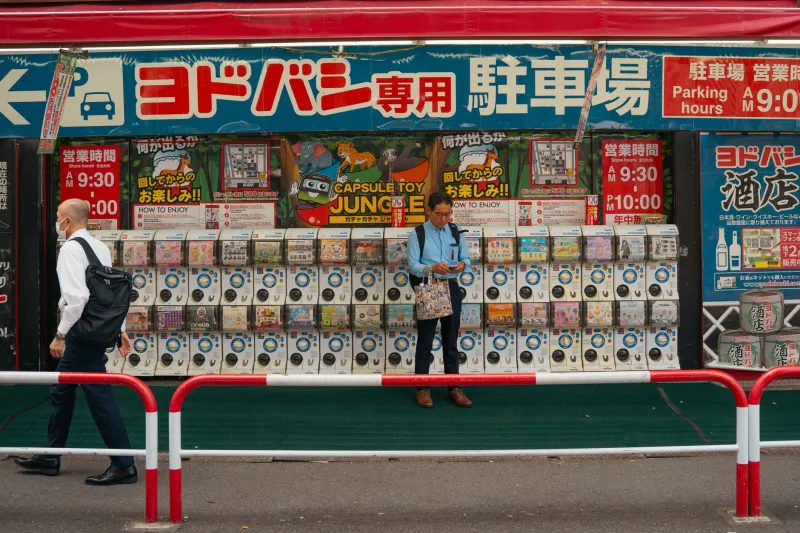
Walk into a Japanese arcade and the first thing you notice isn't the noise or the lights. It's the pace. Games are designed to deliver a complete, satisfying loop in somewhere between two and ten minutes. You don't need to understand a backstory. You don't need to have played the previous installment. You insert a coin — or tap your card — and within thirty seconds, something interesting is happening to you.
This isn't laziness. It's engineering.
Japanese arcade culture, which shaped the design DNA of countless game studios, built its economics around rapid turnover and immediate engagement. Every second of confusion or friction was a second a player might walk away. So designers got very, very good at delivering satisfaction fast. The Taiko no Tatsujin drum games. The Puyo Puyo puzzle series. The entire rhythm game genre, essentially. All of them are masterclasses in what game designers call the "core loop" — the repeatable, satisfying action cycle that keeps players engaged without requiring a significant time investment upfront.
That philosophy didn't stay in the arcade. It migrated into mobile gaming, into handheld consoles, into the structural DNA of how Japanese studios think about player experience at every scale.
Anime's Secret Format Weapon
On the animation side, the contrast with American content is equally striking. A standard Japanese anime episode runs about 23 minutes — tight, purposeful, almost always ending on a note that makes you want more without leaving you feeling cheated. Compare that to the prestige TV model that American streaming platforms have leaned into: 60-minute episodes, 10-episode seasons, slow-burn narratives that ask you to commit serious calendar real estate before the payoff arrives.
There's a reason short-form anime content has exploded on YouTube and TikTok. Clips from Spy x Family, Demon Slayer, Jujutsu Kaisen — they translate perfectly to a three-minute attention window because the original material was already built for efficient emotional delivery. Japanese animators have spent generations learning how to make you laugh, cry, or gasp within a tightly compressed runtime.
The American streaming industry is starting to notice. Netflix's acquisition of anime content has been aggressive and deliberate. The platform has watched the completion rates and the engagement numbers, and what they show is that audiences aren't inherently distracted or impatient — they're just responding rationally to content that respects their time.
The Psychology Behind the Loop
There's real cognitive science underpinning why short, satisfying loops work so well. The concept of "variable reward" — familiar from behavioral psychology and, yes, slot machine design — is part of it. But Japanese game design adds something the pure dopamine-hit model often lacks: closure.
A well-designed quick-play arcade game gives you a complete experience. You attempted something, you either succeeded or failed, you understood why, and you walked away with a resolved feeling rather than an interrupted one. That's psychologically very different from the "just one more episode" trap of binge content, which operates by withholding closure to keep you hooked.
The distinction matters more than it might seem. Binge culture creates engagement through anxiety — you need the next hit because the last one didn't resolve. Japanese bite-sized design creates engagement through satisfaction — the loop completed cleanly, and now you want to try again from a place of pleasure rather than compulsion.
That's a fundamentally healthier relationship with entertainment. And American audiences, many of whom are burned out on the anxiety-loop model, are gravitating toward it even if they can't quite articulate why.
Mobile Gaming and the Five-Minute Session
Nowhere is Japan's short-form mastery more commercially visible than in mobile gaming. Japanese studios — DeNA, GungHo, Cygames — helped define what a mobile game session actually looks like. Puzzle & Dragons, which predates most of the Western mobile hits people think of as genre-defining, was built around sessions you could complete on a subway commute. The energy mechanic, the daily login reward, the quick-clear dungeon — all of it was calibrated for a player with five minutes and a train to catch.
Western mobile gaming eventually caught up, but often in ways that prioritized extraction over satisfaction. The Japanese model, at its best, tried to make those five minutes genuinely fun rather than just sticky. The distinction is subtle but it's real, and players feel it.
Games like Dragalia Lost, Fire Emblem Heroes, and even the global phenomenon Pokémon GO carry this design inheritance. They're playable in short bursts, they deliver something complete in those bursts, and they don't punish you for stepping away.
What American Entertainment Can Actually Learn
The lesson isn't that everything should be shorter. Long-form storytelling has its place — nobody's arguing that prestige drama should be compressed into TikTok clips. The lesson is about intentionality. Japanese designers, across gaming and animation and beyond, have historically asked a question that American entertainment often skips: What does a single session feel like for the person experiencing it?
Not the whole series. Not the complete game. This moment, right now, for this person.
That user-centered, session-level thinking is what produces entertainment that feels respectful of your time rather than hungry for it. And in an era when Americans are drowning in content queues and quietly resenting their own entertainment habits, that kind of respect is starting to feel revolutionary.
The Attention Economy Meets Its Match
Streaming fatigue is real. Open-world game exhaustion is real. The feeling that your leisure time has somehow become another source of obligation — that's real too.
Japan didn't predict any of this specifically. But the design culture that emerged from decades of arcade economics, handheld gaming, and commuter-friendly media has produced tools that are, almost accidentally, perfectly suited to the current moment.
Small bites. Complete loops. Satisfaction delivered fast and cleanly, with no guilt about walking away after ten minutes.
Turns out that's not a limitation. It might be the whole point.