Feel the Game: How Japan's Tactile Gaming Obsession Is Saving American Hands from the Scroll Hole

There's a particular kind of tiredness that hits after a long day of screens. Not sleepy-tired. More like... hollow. You've been technically doing things all day — tapping, swiping, scrolling — but your hands feel like they haven't actually touched anything real. Your brain is fried, your eyes are gritty, and somehow the solution your body keeps suggesting is to pick up your phone and do more of the same.
Japan noticed this problem before most of us had language for it. And quietly, methodically, Japanese game designers built an answer — not in software patches or screen-time apps, but in the physical architecture of play itself.
The Touchscreen Trap Nobody Warned Us About
Here's the uncomfortable truth about modern American gaming culture: the devices we use most have converged on a single, frictionless surface. The smartphone screen. Smooth, cool, unresponsive in any meaningful physical sense. You press it and it doesn't push back. There's no texture, no resistance, no click. Just a tap into a void that responds with light.
For casual play — the stuff that fills commutes and waiting rooms — this is fine. But as a primary mode of interaction, it strips something important out of the experience. Researchers studying sensory engagement have noted that tactile feedback is closely tied to feelings of agency and satisfaction. When your hands feel something, your brain registers that you did something. The absence of that loop leaves a gap that more scrolling doesn't fill.
Japanese arcade culture, by contrast, was built on exactly the opposite premise.
The Button Is the Point
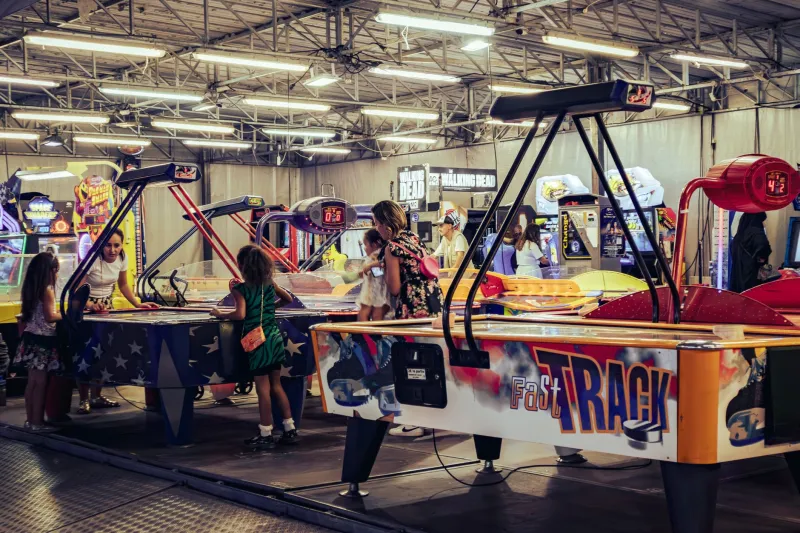
Walk into a proper Japanese game center — the kind that still thrives in Akihabara or Osaka's Den Den Town — and the first thing you notice isn't the visuals. It's the sound. The satisfying thwack of a well-placed button press. The mechanical feedback of a joystick hitting its gate. The tactile snap of rhythm game pads under your palms.
These aren't accidents. Japanese arcade manufacturers like Konami, Taito, and Sega have spent literal decades engineering the feel of their hardware. The buttons in a Street Fighter cabinet or a beatmania IIDX machine aren't just switches — they're precision instruments tuned for a specific sensory experience. There's a reason dedicated players import Japanese arcade parts to build home setups. The feel is irreplaceable.
This philosophy extends beyond arcades. Nintendo's hardware design has always prioritized tactile satisfaction — from the springy resistance of original Game Boy buttons to the Joy-Con's HD Rumble technology, which can simulate discrete sensations like ice cubes shifting in a glass. That's not a gimmick. That's a design team asking, genuinely, what should this feel like in your hands?
Haptics as a Design Language
Japanese developers have been particularly serious about haptic feedback as a storytelling and gameplay tool, not just a notification system. The PlayStation 5's DualSense controller — developed with heavy input from Sony's Japanese engineering teams — uses adaptive triggers that physically change resistance depending on what's happening on screen. Drawing a bowstring feels different from pressing a gas pedal. Rain sounds different from gravel under your virtual feet.
American players initially treated this as a novelty. Then something shifted. Forums started filling with posts from people saying they couldn't go back to older controllers. Not because the games were better, but because their hands missed the feedback. That's a telling detail. The body had developed a preference.
This is what Japanese tactile design philosophy understands intuitively: play isn't just a visual or cognitive experience. It's a full-body one, and the hands are the front line.
Why American Gamers Are Ready for This
The timing of this tactile renaissance isn't random. Screen fatigue is a documented, widespread phenomenon in the US right now. Remote work normalized eight-plus hours of screen time as a baseline. Social media feeds are engineered to keep eyes locked and fingers scrolling. The average American is touching smooth glass for a significant portion of their waking hours.
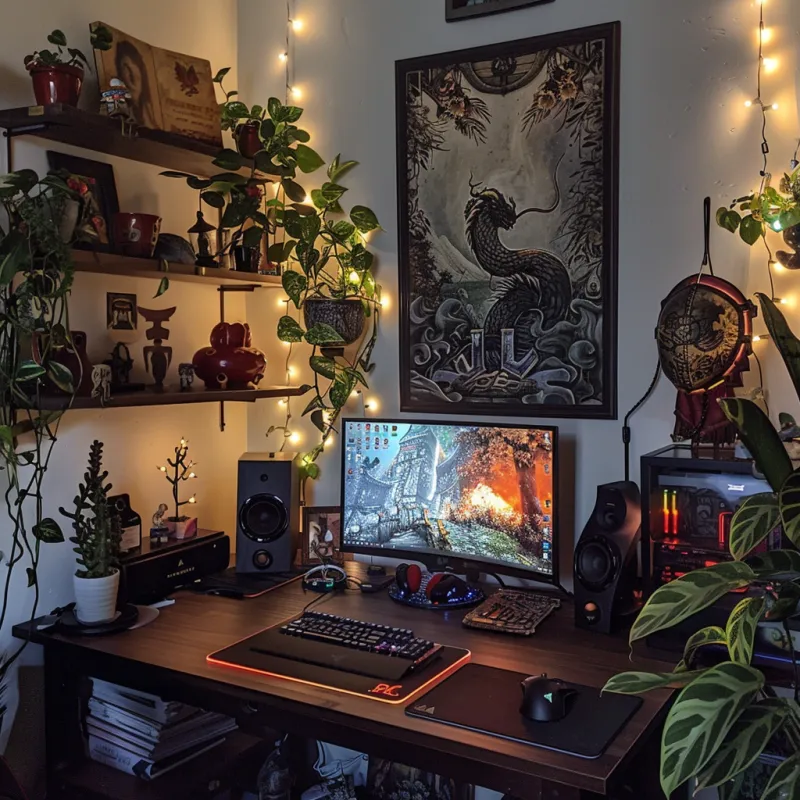
Against that backdrop, games that demand physical engagement — that reward the feeling of input, not just the outcome on screen — hit differently. There's a reason retro gaming is booming. There's a reason mechanical keyboards have a devoted cult following. There's a reason people are buying handheld consoles and analog controllers and tabletop games with chunky wooden pieces. Hands want to feel things. It's not nostalgia. It's sensory need.
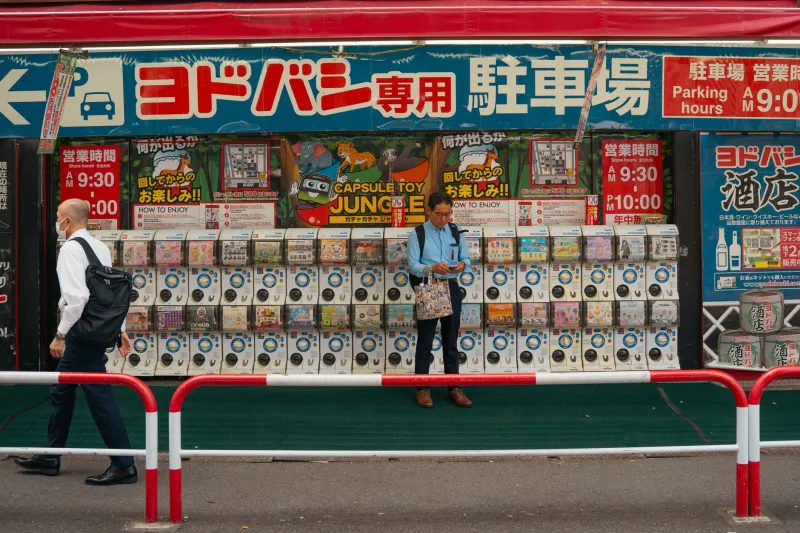
Japanese gaming culture has a structural advantage here because it never fully abandoned the physical. While Western mobile gaming went all-in on touchscreens, Japan maintained robust arcade scenes, handheld hardware innovation, and a collector culture that prizes physical media and merchandise. The tactile was always part of the package.
Small Rituals, Big Reset
What's interesting is how this plays out in everyday American gaming habits. People who pick up rhythm games like Taiko no Tatsujin or Guitar Hero-style drumming setups often describe the experience as genuinely therapeutic. The physicality of it — arms moving, hands striking, body responding to rhythm — creates a kind of active reset that staring at a phone simply can't replicate.
Similarly, players who invest in proper arcade sticks for fighting games frequently report that the ritual of sitting down with the hardware, feeling the weight of it, engaging the throw of the joystick — it creates a mental shift. You're not passively consuming. You're doing something with your body. The game is happening in your hands as much as on the screen.
This is the quiet insight at the heart of Japanese tactile gaming design: the interface is part of the experience. The way something feels to operate shapes how playing it feels emotionally. Get the hands right and the rest follows.
What Comes Next
As VR and mixed reality continue to evolve, the question of tactile feedback is becoming urgent in new ways. Japanese companies are already deep in this conversation — Sony's haptic research, Nintendo's ongoing hardware experimentation, and indie developers building games specifically designed around physical interaction are all pointing in the same direction.
The future of play, if Japanese design philosophy has anything to say about it, isn't going to be more glass. It's going to be more texture, more resistance, more sensation. More reasons for your hands to feel like they did something worth remembering.
And honestly? After years of smooth screens and hollow scrolling, that sounds like exactly the kind of upgrade American gamers are ready to feel.