No Trophy, No Problem: How Japanese Games Quietly Redefined What It Means to Win
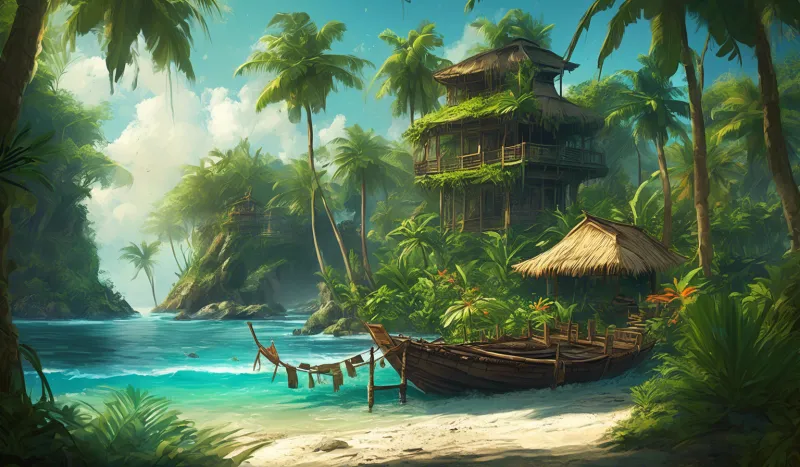
Photo: cozy peaceful video game island nature scene relaxing, via aiwallpaperarts.com
Somewhere around hour forty of Animal Crossing: New Horizons, a friend of mine realized she hadn't checked a single objective menu. She'd been planting flowers, chatting with a smug little cat named Bob, and obsessively repositioning her outdoor furniture. Nobody told her she was doing great. No XP bar filled. No rank-up jingle played. And yet she described it as one of the most satisfying gaming experiences of her life.
That moment — quiet, personal, completely unverifiable by any external metric — is exactly what a generation of Japanese game designers has been engineering for decades. And America is finally catching on.
The Long Shadow of the Win State
For most of gaming's mainstream history in the U.S., success had a shape. You beat the boss. You topped the scoreboard. You unlocked the final cutscene. Western game design, heavily influenced by arcade culture and competitive sports logic, built its feedback loops around conquest. You played to win, and winning meant someone else lost — or at minimum, a challenge got definitively crushed.
Japanese studios were doing something different in the background. Nintendo's life simulation franchises, the gentle melancholy of games like Harvest Moon (now Story of Seasons), and later the emotionally devastating Spiritfarer from Thunder Lotus (a Canadian studio, yes, but one steeped in Japanese aesthetic influence) were constructing something harder to measure: a sense of being somewhere rather than getting somewhere.
There's no endgame in Animal Crossing. There's no final boss in Stardew Valley. In Spiritfarer, the victory condition is, essentially, learning to let go — of characters you've grown to love, of the need for resolution, of the idea that endings are supposed to feel triumphant.
The Cozy Game Explosion Isn't an Accident
The term "cozy game" has become something of a cultural shorthand in American gaming circles over the last few years, but it's worth examining where that aesthetic DNA actually comes from. The unhurried pacing, the emphasis on craft and collection, the world that keeps existing whether or not you're "progressing" — these are hallmarks of a distinctly Japanese approach to interactive entertainment.
Nintendo's design philosophy has long prioritized feel over friction. The tactile satisfaction of pulling a weed in Animal Crossing, the meditative rhythm of casting a fishing line — these micro-interactions are engineered to deliver a low-key dopamine hit that doesn't require you to defeat anything. It's play for play's sake, something Asobi Lab Billion has been tracking as a core thread in Japanese entertainment culture for a while now.
And the numbers back it up. Animal Crossing: New Horizons sold over 43 million copies worldwide. Stardew Valley crossed 30 million. These aren't niche titles. They're cultural phenomena that happened to be built around the radical premise that players don't need to win anything.
Emotional Narrative as the New High Score
What's particularly fascinating is how these games have shifted the language American players use to talk about accomplishment. Browse any gaming subreddit thread about Spiritfarer and you'll find people describing their experience in terms that sound less like gaming reviews and more like therapy sessions. "I cried for twenty minutes." "I finally understood how to grieve." "I didn't want it to end but I also needed it to."
That's a seismic shift. For a medium that spent decades defending itself against accusations of emotional shallowness, Japanese-influenced titles have quietly built a counterargument more persuasive than any critical essay. The emotional resonance is the achievement. Feeling something deeply is the point.
This connects to a broader Japanese entertainment philosophy — one visible in anime, in certain strands of J-RPG storytelling, in the concept of mono no aware, the bittersweet awareness of impermanence. American pop culture tends to resolve. Japanese storytelling is often more comfortable sitting inside ambiguity, inside feeling, without rushing toward a tidy conclusion.
Why the Competitive Industry Is Paying Attention
Here's where it gets commercially interesting. The major players — the studios and publishers who've built empires on battle passes and ranked matchmaking — are watching the cozy game space with something between confusion and genuine curiosity.
Microsoft added Stardew Valley to Xbox Game Pass. Major gaming conventions now dedicate entire showcase segments to "wholesome" titles. The Wholesome Games showcase at the Summer Game Fest has grown into a legitimate event with a dedicated following. Publishers who once wouldn't have touched a game without a PvP mode are now greenlighting titles about running bakeries and tending to ghost gardens.
Some of this is pure market opportunism — executives seeing numbers and chasing them. But some of it reflects a genuine industry reckoning with a question the players themselves have been answering for years: What if the goal isn't to win? What if the goal is just to feel good about the time you spent?
Redefining the Gamer
The demographic implications are significant. Non-competitive games have consistently pulled in players who'd previously bounced off mainstream gaming — older adults, people managing anxiety, players who found the hostility of online competitive spaces exhausting or exclusionary. Women, who make up roughly half of all U.S. gamers, have been vocal advocates for cozy and narrative-focused titles.
In a way, Japanese design philosophy accidentally built the widest tent in gaming. By removing the win condition, these games removed a lot of the gatekeeping that had calcified around the medium.
And for those of us who've spent years watching gaming culture wrestle with its identity, that feels like something worth celebrating — even if there's no trophy for it.
The Invisible Finish Line
Maybe the most radical thing about these games is that they trust players to define their own ending. You stop playing Animal Crossing when you feel done. You stop tending your Stardew farm when the season feels complete to you. That kind of agency — not over enemies or objectives, but over your own sense of satisfaction — is genuinely novel in mainstream entertainment.
Japanese designers have been building toward this for a long time. American players are just now learning to receive it. And once you've felt what it's like to succeed at something that can't be scored, it's pretty hard to go back to just chasing the leaderboard.