Who Really Owns Your Game? How Japanese Maker Culture Is Handing the Controller Back to Players
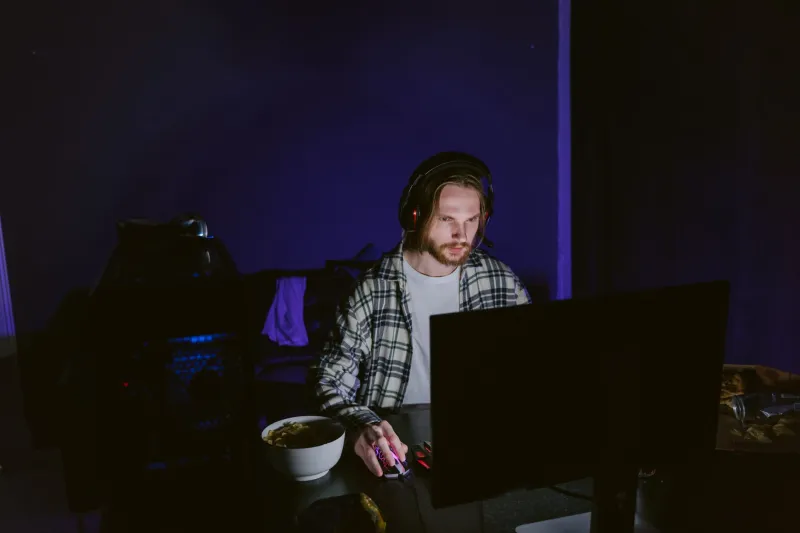
There's a moment every seasoned gamer recognizes. You're deep into a title you love, and you think — what if this worked differently? What if the map was bigger, the character moved faster, the story bent toward something the developers never imagined? For most of gaming history, that thought dissolved into nothing. You played what you were given.
But a growing number of players, particularly younger ones, aren't letting that moment pass anymore. And the philosophy fueling their refusal? It's older than most of them realize — and it traces a surprisingly direct line back to Japan.
The Arcade as Open Lab
Long before "user-generated content" became a product feature, Japanese arcade culture was quietly practicing it. In the 1980s and early '90s, devoted players didn't just master cabinets — they cracked them open. Operators tweaked difficulty switches. Enthusiasts swapped ROM chips to unlock hidden modes or regional variants. Small shops in Akihabara became informal hardware labs where the line between consumer and tinkerer didn't really exist.
This wasn't fringe behavior. It reflected something embedded in Japan's broader maker tradition — a culture that treats objects, including commercial ones, as starting points rather than finished products. From the meticulous customization of model kits to the intricate fan-made doujin games sold at Comiket every summer, Japan has long operated on the assumption that engaging deeply with someone else's creation is a form of respect, not theft.
That assumption is now colliding head-on with how American tech and entertainment companies think about intellectual property — and the collision is generating sparks.
Minecraft, Roblox, and the Inheritance of an Idea
When Minecraft exploded in the US market, it was easy to frame it as a Scandinavian phenomenon. And sure, Markus Persson built it. But the culture that made it a generational touchstone? That's messier to pin down.
Japanese players were among Minecraft's earliest and most prolific builders, constructing pixel-perfect recreations of Kyoto temples, entire Shinkansen rail networks, and sprawling anime-inspired cities. More importantly, the Japanese modding community treated the game's open architecture not as a bonus feature but as the actual product. The base game was a canvas. Everything else was negotiable.
Roblox tells a similar story with an even sharper edge. The platform's entire economy runs on user-created content — games built by players, for players, generating real money. It's essentially a formalized version of what Japanese doujin culture has practiced informally for decades: a space where fan creators aren't just tolerated but celebrated, occasionally even commercially empowered.
Gen Z didn't invent this model. They inherited it, absorbed it through years of YouTube tutorials and Discord servers, and now they expect it everywhere.
The Ownership Question Nobody Wants to Answer
Here's where things get genuinely complicated. When a 17-year-old in Ohio spends 200 hours building a custom game mode inside someone else's platform, who owns that creation? When a modder in California rewrites a Japanese RPG's entire dialogue system and releases it for free online, is that vandalism or tribute?
Japanese IP holders have historically occupied an interesting middle ground on this question. Companies like Nintendo are famously protective of their trademarks — and yet Comiket, Japan's massive fan-work convention, has operated for decades with a kind of unofficial tolerance from major rights holders. The unspoken rule: don't commercialize it aggressively, don't embarrass the brand, and we'll look the other way.
American companies are less comfortable with ambiguity. Platform terms of service run dozens of pages. DMCA takedowns fly fast. And yet the demand from players — especially younger ones — keeps pushing in the opposite direction. They want tools. They want permissions. They want the canvas, not just the painting.
Some developers are listening. The modding tools baked into titles like Baldur's Gate 3 and Hades II are genuinely robust. But those are exceptions. For every studio that opens the hood, five others treat their game like a sealed appliance.
What Gen Z Is Actually Asking For
Spend any time in modding communities — the ones on Nexus Mods, the dedicated subreddits, the Discord servers with thousands of members — and you start to hear a consistent undercurrent. This isn't really about hacks or cheats. It's about authorship.
Gen Z grew up in an era when creativity tools were everywhere. GarageBand at 10. Photoshop tutorials at 12. TikTok video editing by 15. The idea that you consume media passively, without reshaping it, feels genuinely foreign to a lot of them. They've always been remixers. They've always been makers.
Japanese gaming culture, with its long tradition of treating player creativity as a natural extension of the play experience, maps onto that instinct almost perfectly. When young American gamers discover the depth of Japan's doujin ecosystem — the fan games, the ROM hacks, the elaborate custom scenarios built inside commercial titles — many of them feel like they've found a mirror.
The question isn't whether they'll keep creating. They will. The question is whether the industry will build structures that acknowledge their contributions — or keep pretending those contributions don't exist.
The Lab Is Already Open
At Asobi Lab Billion, we think about play as a living, evolving practice — not a product you purchase and shelve. And what's happening right now in modding communities across the US feels like one of the more honest expressions of that idea.
The tools are getting better. The conversations around digital ownership, NFTs aside (please, let's leave those aside), are getting more nuanced. Platforms are slowly recognizing that the players who care enough to rebuild their games from scratch are exactly the players worth keeping.
Japan figured out a long time ago that the best thing you can do with a passionate audience is give them room to play. Not just inside the game — but with the game itself.
Gen Z is demanding that room. And if the industry doesn't hand it over willingly, they'll find a way to make their own door.
The arcade cabinet was never really locked. It just took a few generations to realize it.